
A few years ago, a “good office” in India meant enough desks, a decent conference room, and air-conditioning that worked most days. Today, that definition has changed completely.
Across Indian cities—from startups in Bengaluru to corporate headquarters in Gurugram and Ahmedabad—businesses are asking a different question:
Does our office actually support how our people work?
As we move toward 2026, office interior design is no longer about keeping up appearances. It’s about building spaces that respond to changing work cultures, hybrid teams, and evolving employee expectations.
At Go Captains Built, we see this shift first-hand. Here are the key office interior design trends for 2026, explained through the lens of how Indian workplaces are really changing.
Offices Designed for Hybrid Reality, Not Old Habits
In many Indian organisations, hybrid work started as a temporary adjustment. By now, it’s clear—it’s here to stay.
Companies are realising that designing an office assuming 100% attendance no longer makes sense. Instead of rows of unused desks, offices are being reimagined as collaborative hubs. Spaces where teams come together for meetings, brainstorming sessions, and decision-making.
We’re seeing offices reduce fixed seating and introduce shared work zones, flexible desks, and informal meeting areas. The focus has shifted from where people sit to how people interact.
In 2026, the most successful offices will be those designed for connection, not compulsion.
The End of One-Size-Fits-All Open Offices
Open offices were once seen as modern and progressive. In reality, many Indian offices discovered they were noisy, distracting, and exhausting.
The new approach is purpose-led zoning.
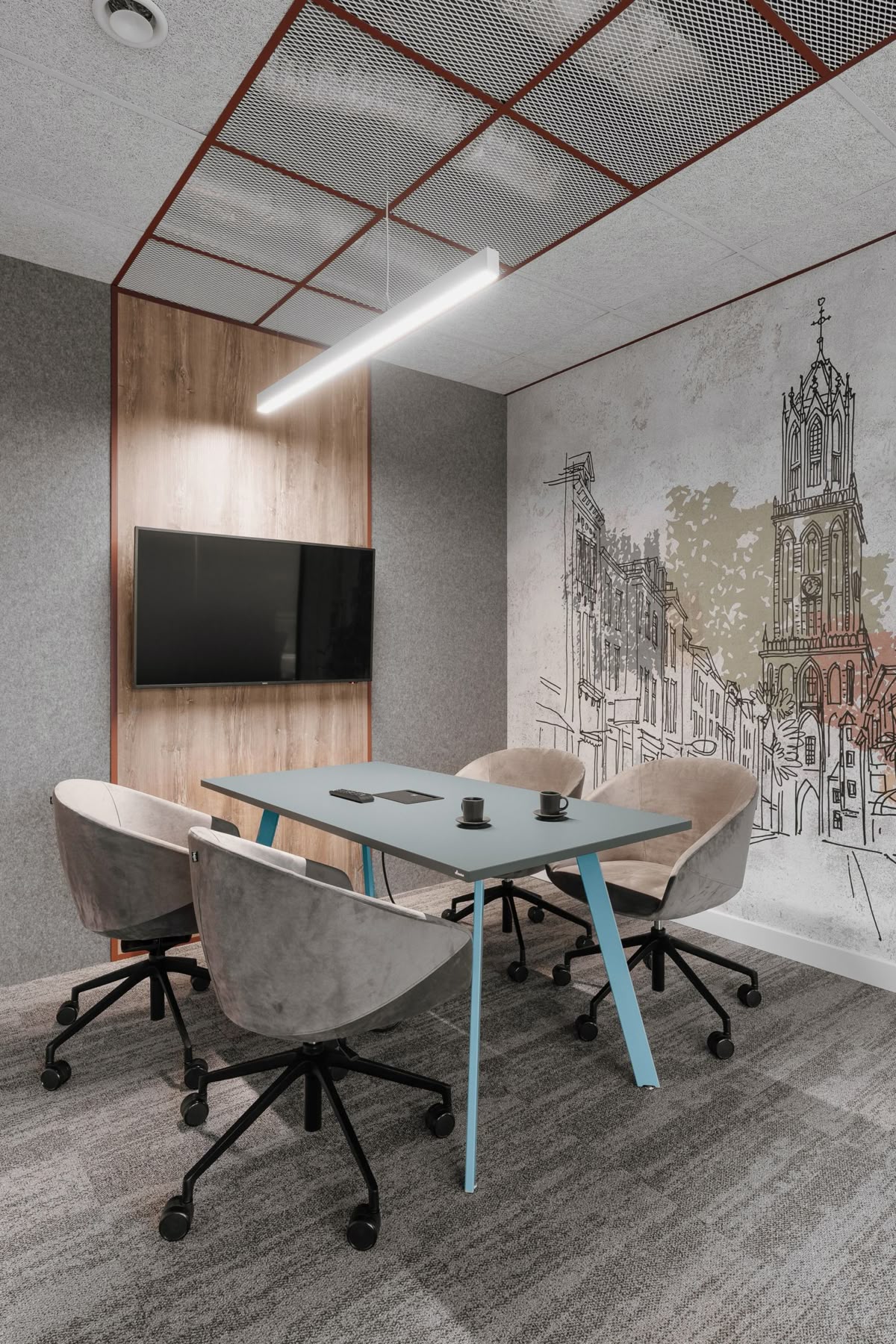
Instead of one large open floor, offices are being divided thoughtfully—quiet areas for focused work, enclosed rooms for calls, collaborative spaces for teamwork, and informal zones for short discussions. Employees can move between these spaces based on their task, not their designation.
This shift is especially visible in corporate offices where productivity and confidentiality matter just as much as collaboration
Well-being Becomes a Business Decision
Employee well-being is no longer limited to HR discussions—it is now shaping core office design decisions.
Indian companies are recognising that uncomfortable chairs, poor lighting, and overcrowded layouts directly affect performance. Offices in 2026 are prioritising ergonomics, better ventilation, and access to natural light.
Simple design choices—wider walkways, better desk spacing, calmer colour palettes—make long workdays feel less draining. The goal isn’t luxury; it’s sustainability for people.
A workspace that takes care of its employees earns loyalty in return.
Nature Enters the Indian Office Space
In dense urban environments, offices often feel disconnected from nature. That’s changing.
Biophilic design—using natural elements in interiors—is becoming increasingly popular in Indian offices. Indoor plants, wooden finishes, stone textures, and soft, earthy colours are being used to break the monotony of glass and concrete.
These aren’t decorative additions. They create calmer, more balanced environments that help employees stay focused and relaxed, even during high-pressure workdays.
By 2026, greenery in offices won’t be an aesthetic choice—it will be an expectation.
Technology That Works Quietly in the Background
Indian offices are becoming smarter, but not louder.
Instead of visible cables and tech clutter, modern office interiors integrate technology seamlessly. Meeting rooms are designed around video collaboration, desks include built-in charging, and lighting adjusts automatically based on usage.
The best-designed offices make technology feel intuitive. You don’t notice it—until you realise how smoothly everything works.
This kind of integration ensures offices remain future-ready without constant upgrades.
Offices That Reflect Brand Culture, Not Just Logos
For Indian companies, the office is often the first physical touchpoint for clients, partners, and new employees. In 2026, businesses want their spaces to reflect their identity—subtly and thoughtfully.
Branding in interiors now goes beyond logos on walls. It’s expressed through colour palettes, materials, spatial flow, and design themes that reflect company values.
At Go Captains Built, we approach branding as part of the architecture itself—so the office tells a story without trying too hard.
Sustainability as a Smart Investment
Sustainability in Indian office interiors is no longer limited to certifications. Businesses are choosing durable materials, energy-efficient lighting, and designs that don’t require frequent renovation.
This approach reduces long-term costs while aligning with responsible business practices. In 2026, sustainable design isn’t about trends—it’s about making smarter, future-proof decisions.
Flexible Furniture for Growing Teams
Indian businesses grow and change quickly. Offices need to keep up.
Instead of rigid layouts, companies are investing in modular furniture, movable partitions, and multi-use spaces. This flexibility allows teams to expand, restructure, or collaborate differently—without disrupting operations.
A flexible office supports growth rather than restricting it.
A Move Toward Calm, Timeless Design
One noticeable shift is the move away from loud, trend-heavy interiors. Offices are embracing calmer, more refined aesthetics—neutral colours, clean lines, and clutter-free spaces.
This design language feels professional, mature, and long-lasting. It reflects confidence rather than excess.
Final Thoughts
Office interior design in 2026 is about understanding people first—how they work, collaborate, and feel within a space. Indian companies that design with this mindset will create workplaces that attract talent, improve productivity, and strengthen brand culture.
If you’re planning to redesign your office or build a new one, Go Captains Built helps translate future workplace trends into practical, high-performing interiors.